Online Lecture “How outreach programs can foster the civil participation of older people” with Dr. Dušana Findeisen
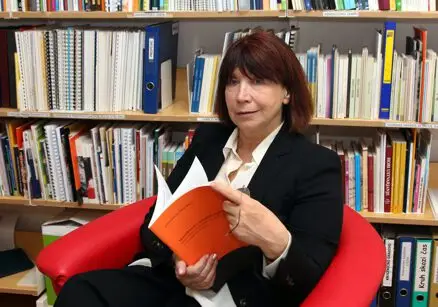
In her lecture, Dr. Findeisen will explain the concept of outreach as it is understood in social welfare, adult education, and education for older people across different European contexts. The lecture will focus on how outreach practices aim to identify, approach, and support vulnerable and socially disadvantaged groups who are at risk of marginalization.
Online Workshop „WordPress for Beginners“ with Gabriele Flemming
This workshop is for anyone interested in creating a simple Website. During the online qualification workshop “WordPress for Beginners” with Gabriele Flemming participants learned the basics of building a website with WordPress, including essential functions and design options. Download the PowerPoint Presentation here:
Come Together – Ukrainians in times of war and their resilience

This special session shows how democracy is rooted through solidarity, participation, and mutual support in society. Voices from Ukraine as well as Ukrainians who have found refuge in Germany, including in Ulm, share their experiences, challenges, and hopes, highlighting the importance of support that empowers people to help themselves.
Save the date: July 9-11, 2026, and call for abstracts
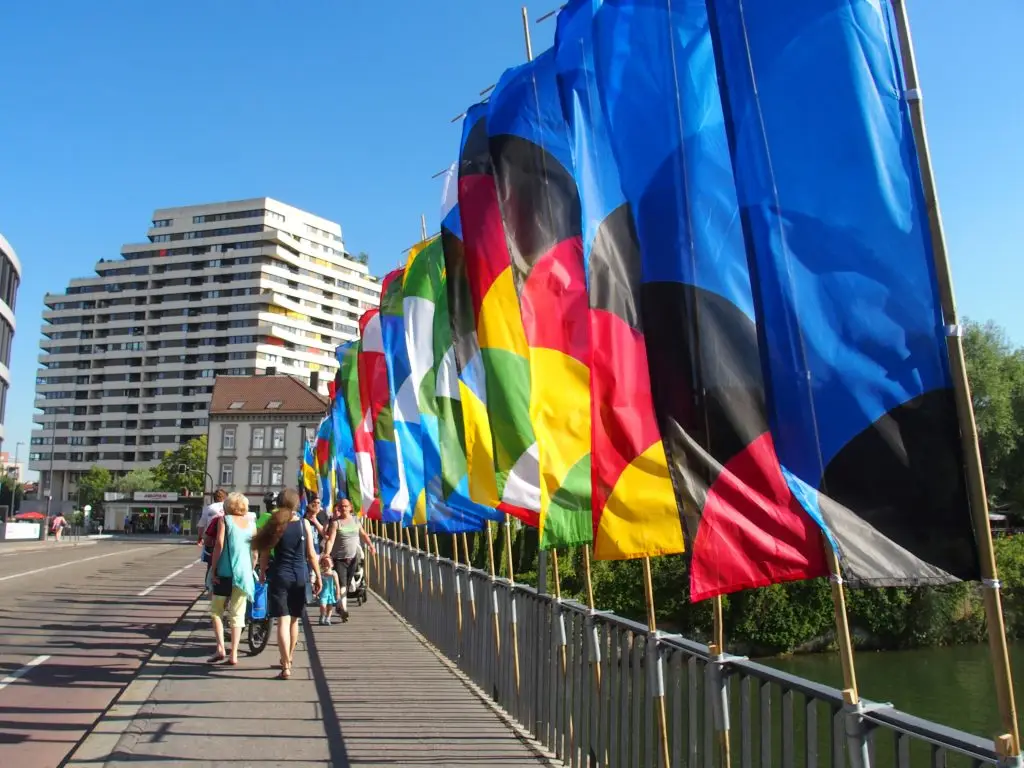
Dear Danube-Networkers,Dear friends of the Danube, From July 9-11, 2026, the 10th partnership meeting of the Danube-Networkers education network will take place in Ulm as part of the International Danube Festival Ulm/Neu-Ulm, with representatives from various areas of civil society (education, culture, social affairs, environment, and others) from all countries in the Danube region participating. The topic of our meeting this time is “Democracy needs everyone.” The focus will be on exchanging examples of good practice – how can we strengthen participation, cooperation, and networking across borders and age groups in civil society and work together for a peaceful and united Europe? We cordially invite you to participate Call for AbstractsAs always, we would like to offer colleagues the opportunity to present topic-relevant projects and methods that may be inspiring to others and serve to exchange knowledge and experience.The ILEU team reserves the right to select incoming contributions. All poster contributions will be considered. We therefore ask interested colleagues to fill out the attached form and send it to us by February 25, 2026, at the latest. https://www.umfrageonline.com/c/hptd7d3r If you have any questions, please do not hesitate to contact us at europa@ileu.net.To this day, nine Danube Networker meetings have been held as part of the Danube Festival in Ulm/Neu-Ulm, with the 10th meeting taking place digitally due to the pandemic 2020. About the meeting 09.07. – 11.07.26The main events will be held in German and English, with translation assistance into other languages.Program (detailed program to follow in early March)– on the evening of July 8 – welcome drink at the Danube Festival– on July 9 – Working meeting and visits to institutions in Ulm that are relevant to the topic. In the evening, there will be a Come Together for everyone at the Family Education Center in Ulm.– on July 10 – Symposium “Democracy needs everyone” at the Edwin Schaff House in Neu-Ulm: keynote speeches, workshops, and a poster exhibition. In the evening, get-together in the parish hall of the Petruskirche in Neu-Ulm.– on July 11 from 11 a.m. to 2 p.m.: “Sing and Swing along the Danube” on the Neu-Ulm stage, with musical contributions from various groups and at the end, dancing together with the Saitenspringer. Further information and Registration documents will be available at the beginning of March 2026.Invitations with expenses covered will be issued to those actively involved in the preparation and implementation (limited number). See Call for Abstracts.If you would like to travel with a group or hold a working meeting during the conference on Thursday, please contact us now so that we can organize the rooms. Further information:About Ulm: https://www.ulm.de/ ; https://www.ulm.de/tourismusAbout the Danube Festival: https://donaufest.de/About the Danube Networkers meeting 2024: https://donaufest.tastes-of-danube.eu/ArrivalUlm is easily accessible by train or via the airports in Memmingen/Munich (with Wizzair/Ryanair from many cities in Southeast Europe), Munich, and Stuttgart.Kind regardsCarmen Stadelhofer and ILEU Team
Online Lecture “Virtual Neighbourhoods against loneliness” with Carmen Stadelhofer
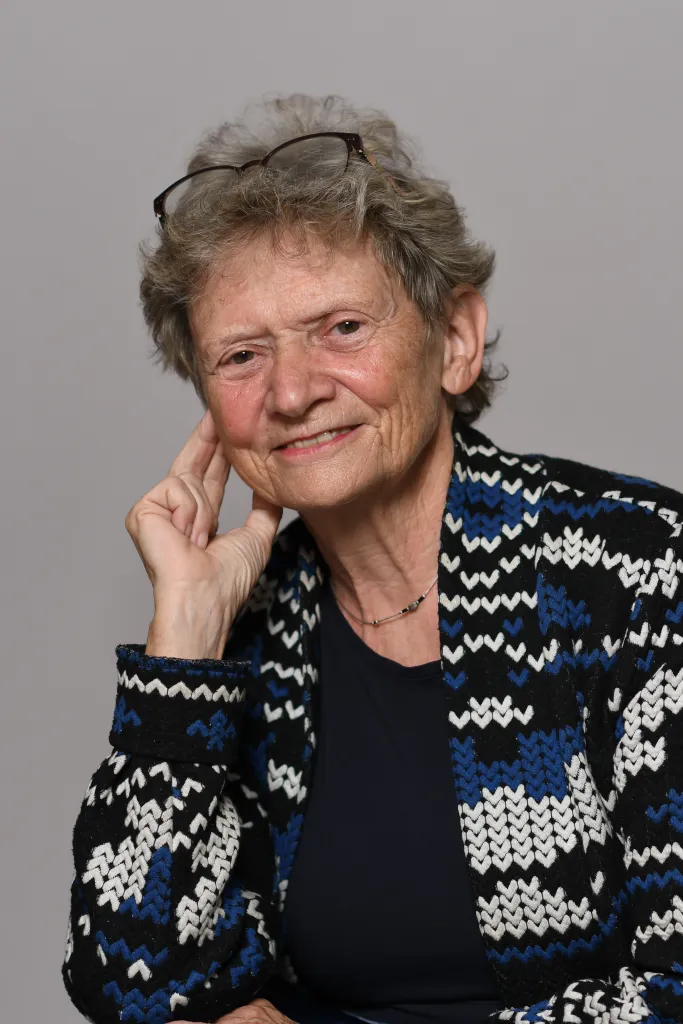
Today, people often live next door to each other without knowing one another. Many people are under strong time pressure or have very different interests. Young and old people rarely meet in a natural and friendly way. Since the coronavirus pandemic, the number of people who describe themselves as lonely has increased in all age groups. In her lecture Carmen Stadelhofer shows how Neighbourhood’ as a social construct has changed and how digital media can help to strenghten social cohesion: Download the PowerPoint Presentation here:
Online workshop “Introduction in Survey Tools – Umfrageonline” with Gabriele Flemming

You would like to evaluate your activities and projects, collect opinions, or plan events? In the online qualification workshop “Introduction to Survey Tools” Gabriele Flemming introduces the survey tool “umfrageonline”. This workshop is for everyone interested in getting to know the survey tool, learning how to use it, and creating a simple survey and is for people of all ages and countries and doesn´t require any skills. Download the PowerPoint Presentation here:
Online Lecture with Dr. Mirona Stanescu “Theaterpädagogik als Medium der Global Citizenship Education – Weltverantwortung auf der Bühne erproben“
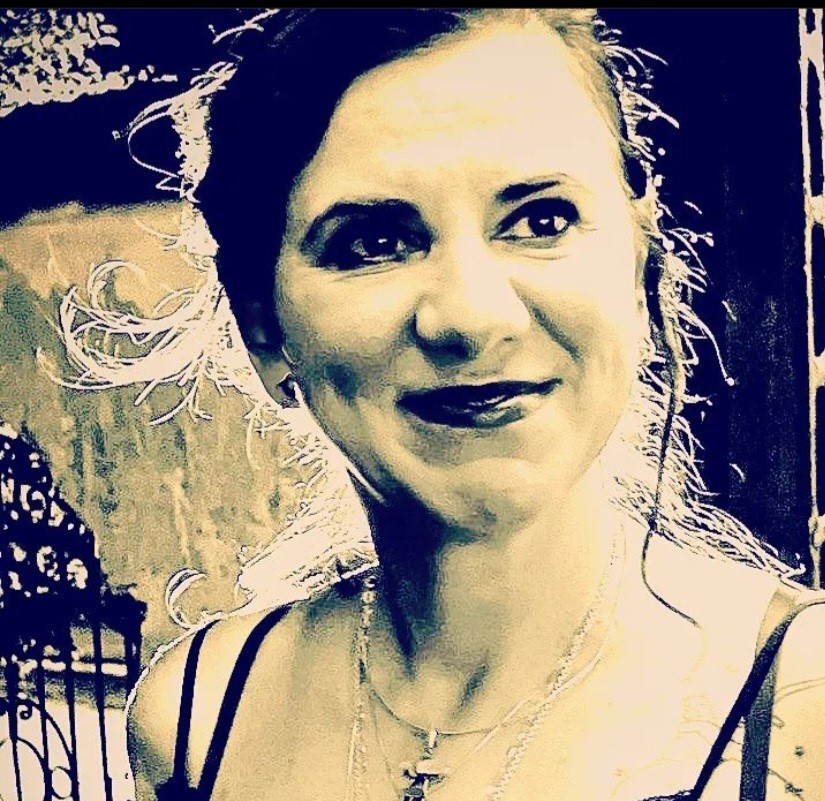
Theatre pedagogy provides a unique space where global issues are not only discussed intellectually but also experienced and negotiated collectively. Within the framework of Global Citizenship Education (GCE), the aim is to empower individuals to see themselves as part of a global community, to take responsibility, and to act towards a fairer and more sustainable world. Theatre – as an art form grounded in empathy, collaboration, and imagination – offers powerful ways to explore these goals. In her lecture Dr- Stanescu examines how methods can make complex global realities tangible and relatable. Through practical examples, she illustrates how theatre-based learning engages mind, body, and emotions, encouraging participants to reflect critically while developing compassion and agency. The lecture was hold in German with translation.
Video Creation Workshop: Storytelling, Editing & AI Tools with David Fichtner
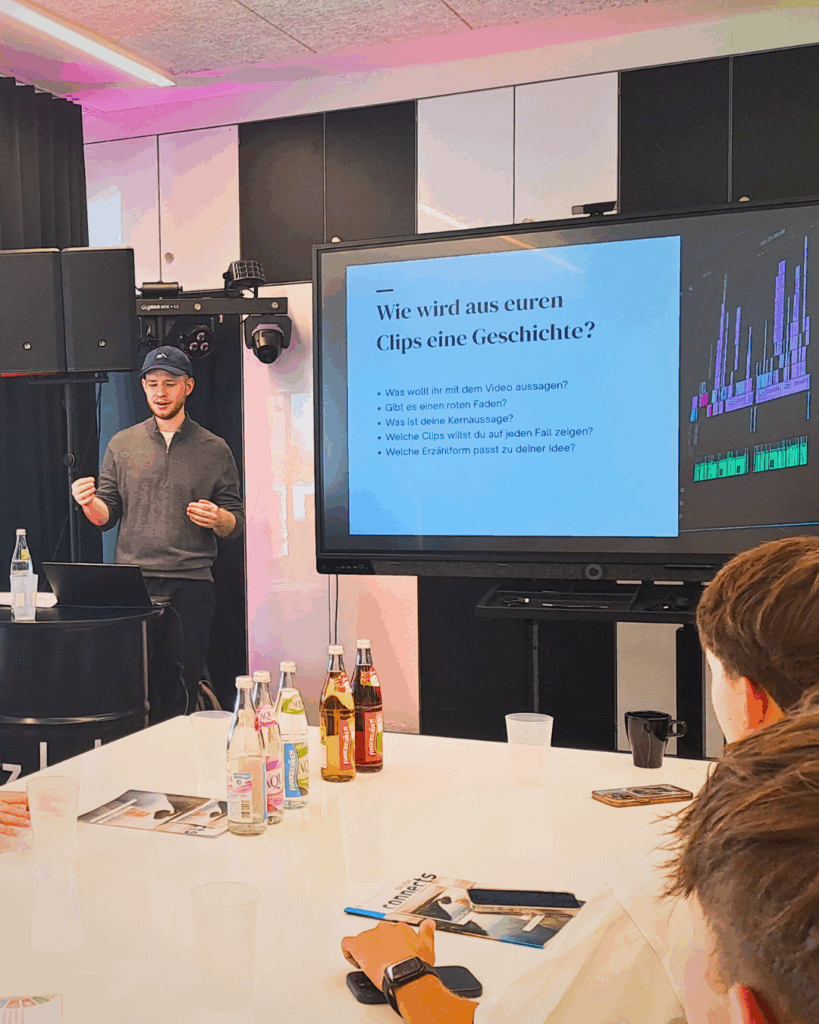
In this two-part online workshop, filmmaker and media trainer David Fichtner introduced participants from across the Danube region and Europe to the essentials of creating impactful short videos — even with simple tools like a smartphone. In the sessions, David demonstrated: Participants not only received technical guidance, but also learned what truly matters in video creation: clarity, intention, and the ability to communicate meaning through images. If you want to learn how to turn your ideas into short, powerful videos, the workshop recording offers valuable insights and practical steps. Watch the workshop recording here: Download the presentation slides in all languages:
Online Workshop: “Training on Video Creation” with David Fichtner, Thursday, 20.11.25 and Tuesday, 25.11.25, 6 pm (CET)
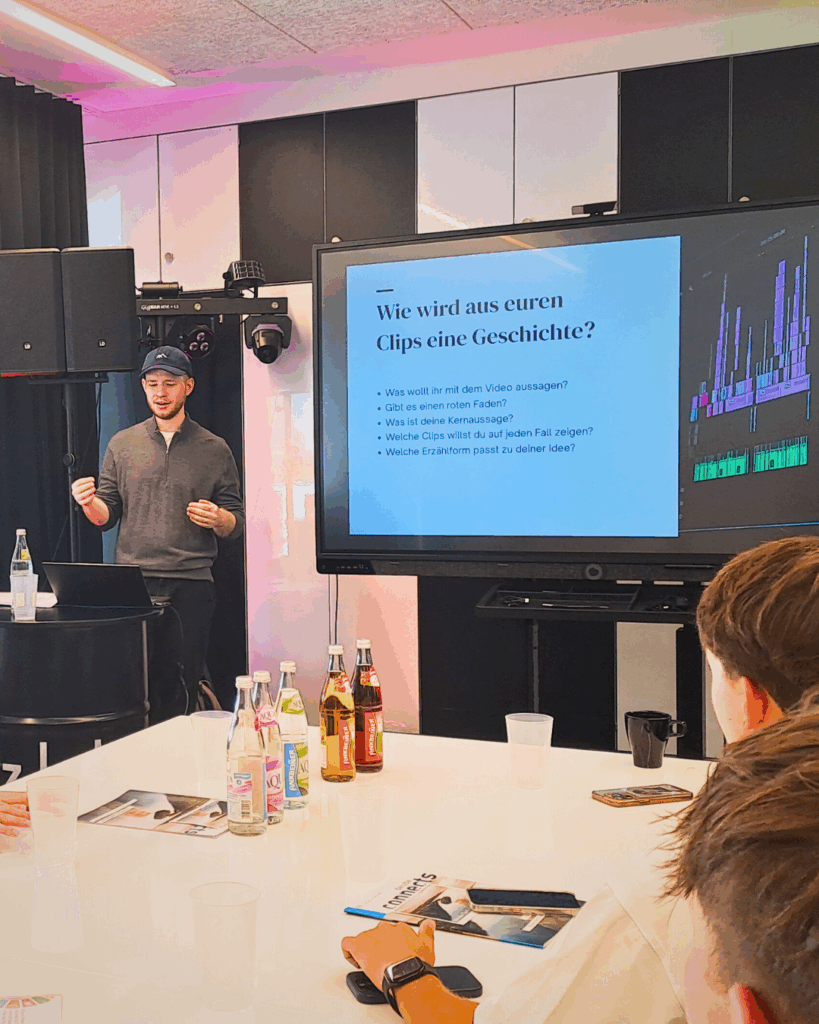
We are happy to invite you to our online qualification workshop “Training on Video Creation” with David Fichtner over Zoom. This two-part training is for everyone interested in video editing, storytelling, and exploring how AI can support the creative process. The first online workshop will be on Thursday, 20 Nov. 25 at 6 pm (CET) and focuses on basic knowledge and storytelling. The second online workshop will be on Tuesday, 25 Nov. 25 at 6 pm (CET) and builds upon the first workshop. It will address questions that may arise after the first workshop and introduce advanced techniques as well as the use of AI tools to enhance and simplify video creation. The qualification workshop will be held in English, with possible translation into German, Bulgarian, Romanian, Ukrainian, and Serbian. You can register for the qualification workshop until 19 November 2025 through our contact form: https://forms.gle/Y3jVo6PTVfHvETmf6 You will get the Zoomlink to the online workshop after your registration.
Online Lecture with Dr. Karen Glinert Carlson, “What has family story to do with civil engagement, democracy, and antiracism”
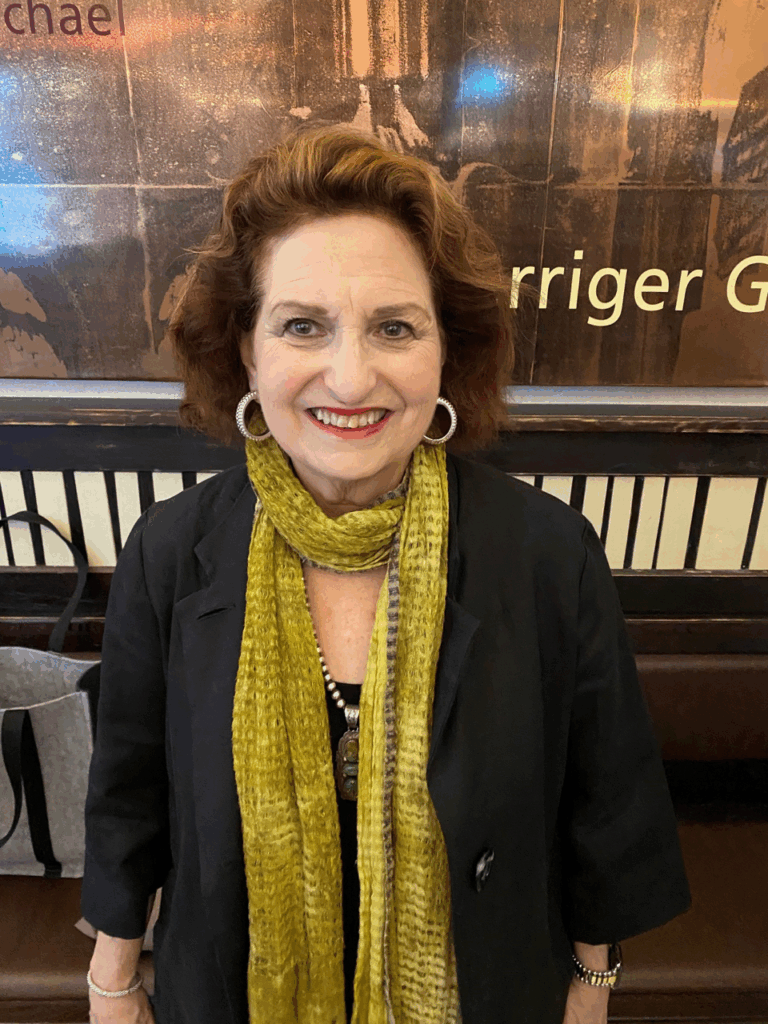
In her moving lecture, Dr. Karen Glinert Carlson uses her own family’s story to illustrate: If you want to learn what family story has to do with civil engagement, democracy, and antiracism, this lecture offers deep insights. Download the PowerPoint Presentation here: