DANUBE SMALL PROJECT FUND
Learning the use of AI to foster the communication between Danubians
Young people from different Danube countries explored how digital tools and artificial intelligence can help overcome language barriers and strengthen international communication.

22–24 July 2025
Three-day workshop in Ulm
19 students
From schools in Odessa and Sofia
Ulm · Odessa · Sofia
International cooperation
AI & digital tools
Communication beyond language barriers
PROJECT OVERVIEW
Using digital tools for communication across borders
In July 2025, 19 students from German-speaking schools in Odessa, Ukraine, and Sofia, Bulgaria, met in Ulm, Germany, together with German pupils and volunteers.
During a three-day workshop, they learned how to conduct effective interviews with experts on five selected sustainability goals and how to use new digital tools, especially AI, to make the content engaging and to translate it into other languages.
The aim was to ensure that the interviews could be discussed without language barriers.
KEY GOAL
Communication without language barriers
Raising awareness of sustainability goals and equipping students with AI skills to break language barriers and foster international dialogue.
THE WORKSHOP
Three days of learning and collaboration
DAY 1
ViMA Danube & digital tools
Introduction to ViMA Danube and other useful digital tools.
DAY 2
Interviews with experts
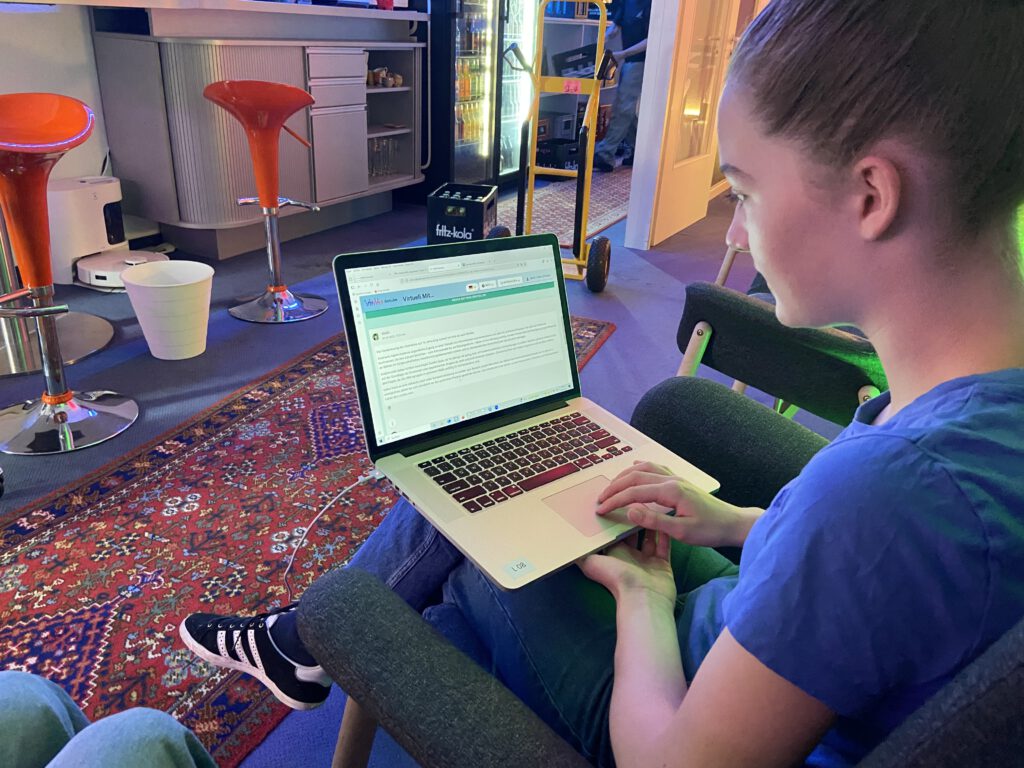
The students worked in mixed-nationality groups to conduct five-minute video interviews with experts in Ulm and share their findings.
The experts came from politics, municipalities, business, and the social and cultural sectors.
DAY 3
Editing, AI & translation
The students learned how to edit videos and use AI tools such as subtitles and avatars to make the content accessible in English, Bulgarian, and Ukrainian.
They used HeyGen for processing video sequences and generating multilingual subtitles.
They presented their AI-enhanced interviews and discussed the results with teachers and other students at Schubart Gymnasium, demonstrating how AI translation can help share valuable insights on the SDGs across the Danube region.
The project also aimed to share the results at the students’ home schools and on ViMA Danube, with discussion in the forum “Implementing sustainability goals in daily life to promote democracy?”.
PROJECT RESULTS
Interviews with stakeholders from Ulm
Students from Sofia, Odessa and Ulm conducted these interviews as part of the Danube Small Project Fund workshop. The original videos are in German; translated versions were created using AI.
Choose a language above each video. Four interviews are available in German, Bulgarian, Ukrainian and English; the Petra Schmitz interview is available in German and English.
Martin Ansbacher
Lord Mayor of Ulm
Petra Schmitz
Lokale Agenda Ulm
Helena Miller
Bündnis 90 / Die Grünen
Carmen Stadelhofer
ILEU e.V.
Jana Pulli
Familienbildungsstätte Ulm
PROJECT SUPPORT
Danube Small Project Fund
The project is sponsored by the DANUBE SMALL PROJECT FUND funded by: The Ministry of Science, Research and Arts Baden-Württemberg, the Federal Ministry for European and International Affairs of Austria, the Arbeitsgemeinschaft (ARGE) Donauländer / State of Lower Austria, the Provincial Government of the Autonomous Province of Vojvodina within the Republic of Serbia, the City of Regensburg, the Danube Office Ulm / Neu-Ulm and the Volksbank Ulm Biberach.
FURTHER LEARNING
More workshops and online qualifications
Explore further learning opportunities from Fit for Democracy. The qualifications overview brings together workshops and online sessions from different dates and activities.