Cycling as a form of protest
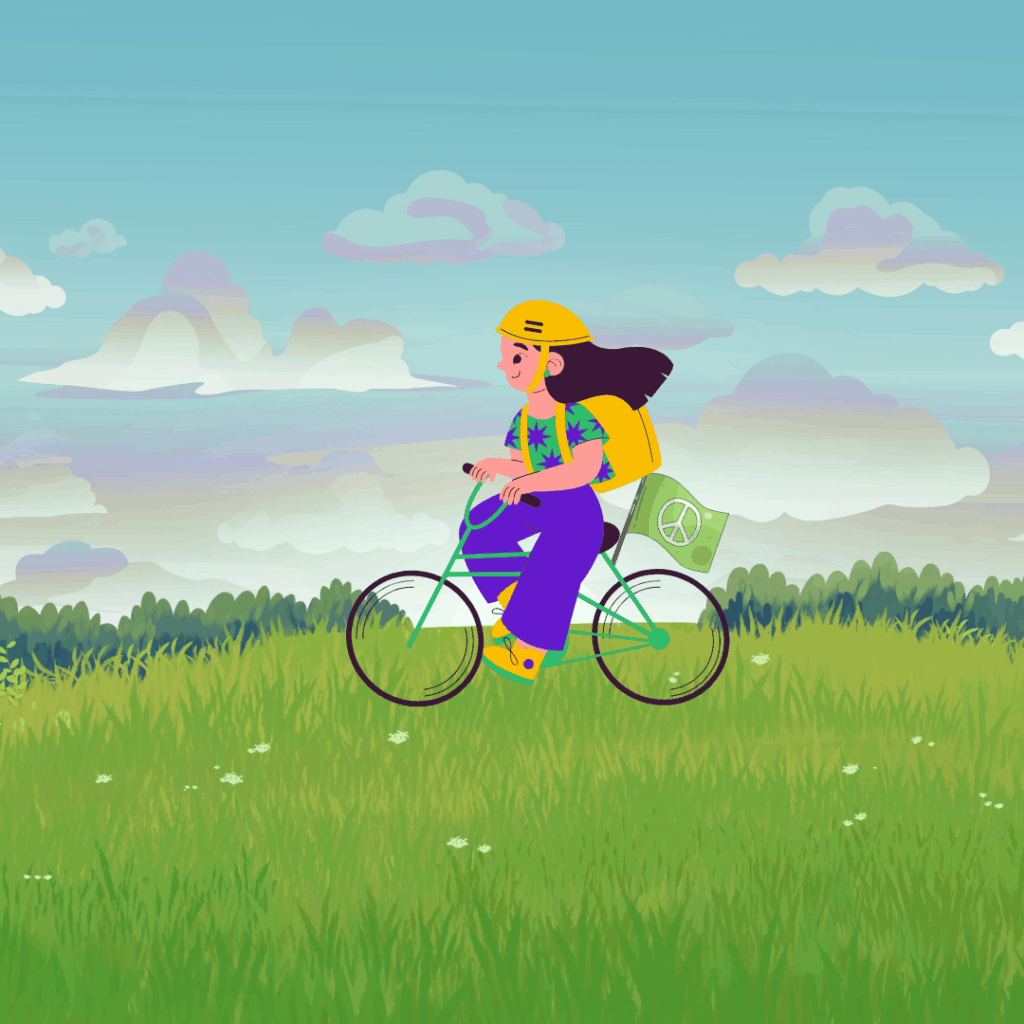
12 Days. 1,400 Kilometers. 80 Serbian Students Take a Stand for Freedom, Democracy, and the Rule of Law From April 3 to 15, 2025, around 80 Serbian students are cycling from Novi Sad to Strasbourg. Last night, on April 12, at 9 PM, they arrived in Ulm. Their journey, which began 10 days ago in Belgrade, is more than just a bike ride — it is a symbolic act of protest and remembrance. Upon reaching Strasbourg, home of the European Parliament, the students aim to draw attention to the importance of freedom, democracy, and the rule of law, as well as to honor the memory of the 16 victims who tragically lost their lives on November 1, 2024, when the canopy of Novi Sad’s train station collapsed. The group is determined to speak out against corruption and injustice in Serbia, and to advocate for democratic values. On their website, they write:“We, the students of Serbia, did not embark on this journey on a whim. We did it because we feel we have no other choice. This is not just a bike ride – it is a path of hope, a form of resistance, and a voice for those who have been silenced. …We are not asking for much – only the right to live without fear, censorship, or violence.”https://de.turadostrazbura.rs/ Their journey can be followed live on their website via GPS tracking. The group arrived in Ulm with a three-hour delay but was warmly welcomed at Münsterplatz by a large crowd of Serbians of all ages living in the region of Ulm/Neu-Ulm. The young cyclists — both men and women — were officially greeted by local authorities: by Martin Bendel, First Mayor of the City of Ulm; Ralph Seiffert, Social Affairs Mayor of Neu-Ulm; and Sebastian Rihm, Director of the Danube Office. All three expressed sincere thanks for the students’ dedication and courage in standing up for freedom, democracy, and the rule of law. Reported by Carmen Stadelhofer
Getting Started with ViMA Danube – Online Platform Qualification for Active Participation
On April 1 and April 4, 2025, an introductory online qualification session was held via Zoom, focusing on the use of the ViMA Danube platform—an open, multifunctional space for networking, exchange, and collaboration across the Danube region. The training aimed to equip participants with the basic knowledge needed to confidently navigate the platform and become active contributors. The session began with an overview of ViMA Danube’s core mission: to connect citizens, initiatives, and organizations working for democracy, education, and cultural exchange in the Danube region. Participants learned how to create their own ViMA Danube account and explored the key features of the platform. Practical guidance was provided on how to use interest groups, discussion forums, and the search & offer section, helping participants understand how to find and contribute to relevant topics. The training also included basic platform handling tips to support ease of use and engagement. The event closed with a Q&A round, ensuring all participants had the chance to clarify their questions. Want to explore the platform? Visit vima-danube.eu/mitmachenUpcoming qualification dates are listed in our calendar Impressions from the qualification seminar
Zoom Qualification – Online Training for Democracy Education

As part of our ongoing efforts to support digital tools in democratic education in the frame of the project “fit4democracy”, a two Zoom qualification sessions were held on April 1 and April 4, 2025. The online training welcomed participants from various countries and aimed to strengthen their confidence in using Zoom for inclusive, participatory events. The sessions covered both basic and advanced features of Zoom. Participants explored core functions such as managing audio and video, adjusting views, and using the “raise hand” feature to engage more actively in discussions. Building on this foundation, the training introduced additional tools like whiteboards for collaborative work, polls for gathering opinions, and breakout rooms for small group exchanges—ideal for interactive formats in democracy-related workshops. A special focus was placed on Zoom’s integrated interpretation function, which enables multilingual events and supports accessibility across language barriers. The training also provided time for participants to ask questions and share experiences, ensuring the content was tailored to their needs. You can access the presentation used during the session further down on this website.Find upcoming qualification dates and exciting new topics in our calendar. Zoom presentation from the session
Democracy workshop in Bad Urach from 5-6 April 2025

From April 4 to 6, 2025, the seminar “Experiencing Democracy” took place at Haus auf der Alb. Around 20 young and older participants from Germany and Ukraine explored democratic values through creative activities. Role-plays, group work, and shared singing fostered a strong sense of community. Many thanks to lpb for their great organization! Read more here Seminar report Impressions from the workshop
2. Local Meeting in Ulm with Local Agenda, 7.04.25
The second local meeting of the Actionbound project brought together a group of engaged individuals committed to designing an interactive scavenger hunt focused on sustainability and social justice in Ulm. A new participant with experience in community support, including food bank initiatives, joined the team. The meeting began with a brief overview of the project’s national and international scope, emphasizing collaboration with partner schools and a broader educational impact. Small groups presented updates on locations selected for the scavenger hunt: A central question raised during the meeting was whether to choose locations based on SDGs or select impactful places first and then link them to relevant goals. Most favored starting with places that resonate and building connections from there. Ideas were also collected for SDG 10 (Reduced Inequalities) and SDG 13 (Climate Action). Suggested locations included community gardens, solar-powered trash bins, a packaging-free shop, and public drinking water stations. Technical aspects were briefly discussed, such as preferred video formats and editing options. Emphasis was placed on keeping content accessible and engaging. Next steps include filming interviews, contacting local organizations, and finalizing content. The goal is to complete the scavenger hunt by July, potentially aligning with Ulm’s sustainability week. The next working session is scheduled for May 12, 2025.
3.International Project Meeting: Sustainability Goals in my City, 1.04.25
The third international meeting of the Actionbound project “Sustainability Goals in My City” focused on two key SDGs: Quality Education (SDG 4) and Peace, Justice, and Strong Institutions (SDG 16). Young participants from Germany, Bulgaria, and Ukraine presented meaningful places in their cities that embody these goals. In Ulm, the City Library was introduced as a vibrant place of knowledge, culture, and community. It offers not only books but also digital services and hosts public events. A group discussion highlighted the continuing importance of libraries in the digital age as spaces for learning, relaxation, and personal growth. From Bulgaria, a video showcased the “Chitalishte”—local cultural centers that promote lifelong learning and preserve traditions. These institutions were compared to German adult education centers but with a stronger focus on cultural engagement and creativity. The Ukrainian groups presented two examples: the Mechnikov University in Odesa, a renowned institution promoting academic excellence and sustainable practices, and a local NGO supporting civilians and stability during the war, representing SDG 16 in action. These stories illustrated young people’s strong commitment to education, peace, and social responsibility. Ulm’s contribution to SDG 16 included a memorial site at the city’s former courthouse, commemorating victims of Nazi-era euthanasia crimes. This understated yet powerful location underscores the importance of remembrance in maintaining peace and justice. During the final round, participants reflected on their experiences, emphasizing how the project deepened their knowledge, encouraged critical thinking, and provided a valuable opportunity to practice German while engaging in intercultural dialogue. The group also previewed the project’s website and discussed future topics, suggesting climate action (SDG 13), reduced inequalities (SDG 10), or sustainable cities (SDG 11) as next steps. The upcoming digital meeting is scheduled for April 29, 2025. Presentations Odesa Sofia Ulm
Meeting in the House of Sustainability 24.03.25
Some German students and the head of the Hdn were present at the meeting. She gave a tour of the house and explained what the House of Sustainability does. Below is a brief description of the house Founded in 2020, the House of Sustainability (HdN) is a collaborative initiative that brings together businesses, schools, and research institutions to drive sustainable development. A key focus group consists of scientists from the University of Applied Sciences Neu-Ulm, working on interdisciplinary approaches to sustainability. A Hub for Events and Innovation The HdN serves as a dynamic venue offering a wide range of activities, including a Repair Café and a lending shop. Events span from film nights and workshops to lectures, catering to a diverse audience. The space is designed with a large central hall featuring smaller seating areas for group discussions and collaboration. Additionally, a fully equipped kitchen fosters interaction and community engagement. Community and Creative Space A strong link exists with the University of Ulm, particularly its IT students, who originally founded Verschwörhaus, a hackerspace now integrated within the HdN. The space is designed for hands-on projects, enabling individuals to develop and execute their own ideas. Student Engagement and Sustainability The HdN collaborates closely with students from the University of Ulm, especially those studying sustainable economics and other sustainability-related disciplines. Around 50 students have participated in small group projects, contributing to various initiatives within the space. Ongoing Activities The HdN continuously engages students in practical projects, such as a recently filmed documentary about the lending shop. Additionally, a coworking space within the facility was established by a member of the University of Applied Sciences Neu-Ulm, further enhancing opportunities for collaboration and innovation.
1. International Meeting: Fit 4 Democracy, 25.03.25
Minutes of the Democracy Discussion Meeting Number of Participants: 26Countries Represented: Bulgaria, Romania, Germany, Poland, France The meeting began with a welcome and an explanation of the translation process, allowing participants to switch between Bulgarian and Romanian translation channels. Following this, everyone introduced themselves, and an overview of the evening’s agenda was presented. A series of democracy-related videos were shown, followed by a discussion on what democracy means to each participant. A survey was presented, prompting reactions and reflections on democracy and its challenges. Participants raised key concerns, including economic disparities affecting access to democratic participation, the rise of fake news, and the difficulties of meaningful debate in modern times. There was a strong interest in discussing how to recognize and counteract manipulation in social and mass media. Participants were divided into three groups for focused discussions: Group 1: Explored the threats to democracy and strategies to counter anti-democratic forces. Topics included the need for better political education, making democracy more tangible, and finding ways to engage citizens beyond elections. Concerns were raised about deteriorating debate culture, lack of direct participation, and challenges in maintaining open dialogue in politically unstable regions. Group 2: Focused on direct participation in democracy, discussing existing initiatives and opportunities in different countries. The role of social media in fostering engagement was debated, as well as risks associated with online activism. The group also examined participation models such as the Cluj participation portal. Group 3: Discussed ways to protect democracy, how political leaders shape public policy, and the influence of media manipulation. The group proposed practical actions such as writing to newspapers, engaging in local political discussions, and using digital tools to spread awareness. After reconvening, each group summarized their key takeaways. Further discussions explored why many people feel disconnected from democracy and what methods could be implemented to increase participation. The idea of developing a toolbox for democracy—a collection of best practices and strategies—was introduced. Participants were invited to contribute ideas for the toolbox, including methods for democratic engagement and education. The session concluded with a discussion on next steps, including online meetings to continue the dialogue, sharing documents and resources, and coordinating schedules for future discussions. Participants expressed enthusiasm for the diverse perspectives shared and looked forward to further exchanges on democracy in different countries.
Visit to Radgasse 8 – A Hub for Sustainable Engagement, 20.03.25

At March 20th 2025, a group of volunteers and full-time employees of the “Lokale Agenda” and “ILEU” were invited to visit the Radgasse 8 in Ulm. Radgasse 8 is a key location for institutions dedicated to sustainable development and social engagement. Various organizations based here focus on issues such as poverty alleviation, educational equity, social integration, environmentally friendly mobility, and ecological sustainability. During the visit, participants gained insight into the diverse activities and initiatives taking place at Radgasse 8: Kulturloge (Culture Lodge) provides people with low incomes access to cultural events. The citizen agency ZEBRA strengthens civic engagement through initiatives such as reading projects for elementary school children. The Flüchtlingsrat (Refugee Council) advocates for the rights of refugees and offers counseling and support. “Engagiert in Ulm” (engaged in Ulm), a local volunteer agency, connects individuals who wish to get involved with suitable projects while also assisting nonprofit organizations in finding volunteers. Sustainable mobility is another focus at Radgasse 8: The General German Bicycle Club ADFC advocates for a bicycle-friendly infrastructure in Ulm and provides advice on cycling-related topics. Additionally, Viva con Agua works to ensure global access to clean drinking water. The visit to Radgasse 8 highlights the wide-ranging commitment to sustainable development and the significant role these institutions play in society. The work being done here contributes to addressing social and ecological challenges on both a local and global scale.
Local Meeting in Ulm with Local Agenda, 17.03.25
A total of 13 participants attended the meeting, representing various local organizations, including the Local Agenda, ADFC, Schubart Gymnasium, and the Sustainability House in Neu-Ulm. The session began with a round of introductions, followed by an overview of Agenda 2030 and its five key principles: People, Planet, Prosperity, Peace, and Partnership. A brief explanation of the 17 Sustainable Development Goals (SDGs) was given to provide context for the project. The discussion then shifted to ActionBound, with an introduction to ILEU and the international framework of the ActionBound project. An explanatory video was shown, followed by a presentation demonstrating an ActionBound example focused on SDG 16 (Peace, Justice, and Strong Institutions). Several questions arose during the discussion, including whether ActionBound is a commercial program (confirmed as yes) and how tourists can be made aware of such initiatives. The target audience for the project was identified as individuals aged 14 and older. It was suggested that all 17 goals should be represented, but not within a single ActionBound tour, as this would make it too long. A recommended duration of approximately 1.5 to 2 hours was proposed. To encourage idea generation, small groups were formed to brainstorm collaboratively. Participants worked in groups to identify locations of interest for the scavenger hunt. Ideas included integrating time-sensitive elements to ensure that places closed on specific days would be accounted for in the tour. The focus should be on 5-8 locations, ensuring a well-structured route. The discussion also emphasized SDG 4 (Quality Education) and SDG 16. Several key assignments were established: Additionally, those interested in further collaboration were invited to an online meeting on April 1 to continue the discussion and refine the project plan. The meeting concluded with an agreement to develop and finalize the scavenger hunt route based on the proposed locations.