“Digital tools to strengthen communication between citizens from the Danube countries”
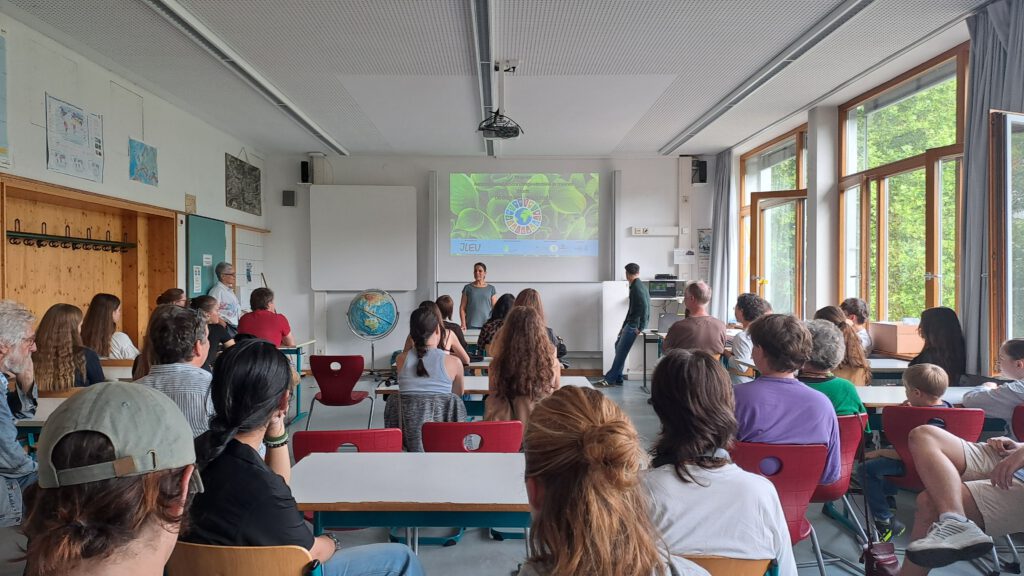
On the third and final day of the workshop, 24 July 2025, the results were presented and the project ended with a closing event. In the morning, all participants visited a class in school. Afterwards everyone met to show their filmed interviews to other students and exchange ideas in discussion rounds. The younger students asked questions about the sustainability goals and to the exchange students, while the teachers referred to their lessons and were interested in the project. After lunch, the last videos were finalized and some shortcomings were revised. In the early evening, the teachers, the ILEU e.V. team and the participants met with their German (host) families at Schubart Gymnasium Ulm. The participating students presented their interviews and shared their cultures with traditional dances and songs. In the end, Carmen Stadelhofer handed out the certificates. Furthermore, thank-you speeches were hold and small tokens of appreciation were exchanged.
Workshop: “Clips become a Story” with David Fichtner on the 23rd of July 2025
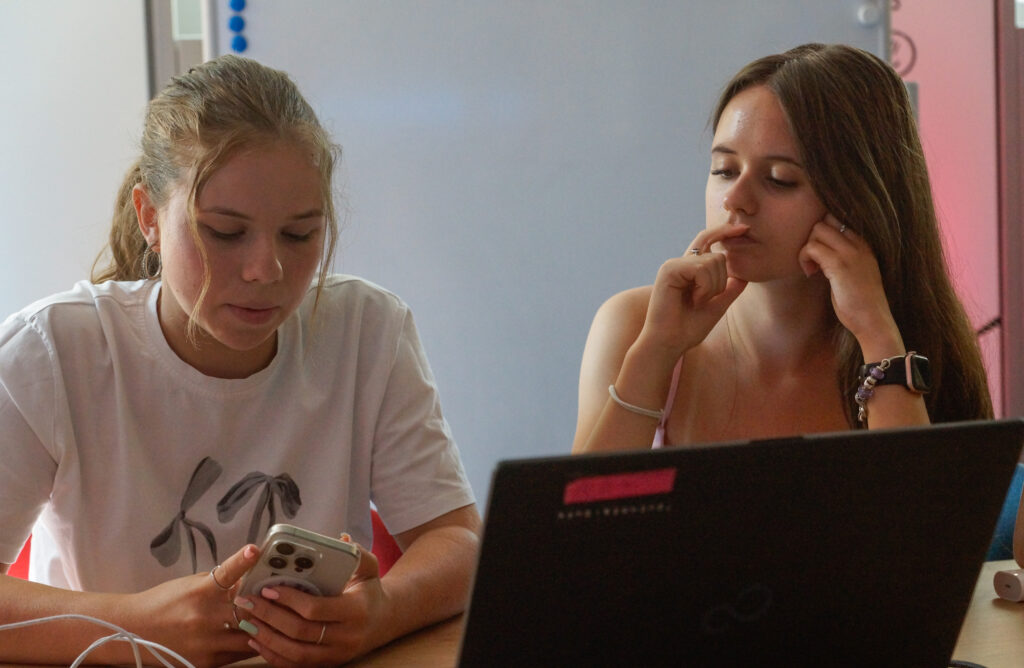
On the second day of the workshop, 23 July 2025, the edition of the rough cuts followed. At the beginning, external media expert David Fichtner introduced the apps ‘CapCut’ and ‘HeyGen’. He also explained different interview styles and presented various tools for cutting, editing, adding license-free music and improving sound quality. He also demonstrated the intelligence of AI by creating a realistic-looking avatar based on a real person and showing examples of its use on social networks. He emphasized the importance of always keeping a critical eye and the danger of fake news. While editing their own videos, the participants put theory into practice and got creative. The results are five interviews. Each of them is translated into Bulgarian, Ukrainian and German with matching subtitles. The interviews are three to five minutes long and represents the collaboration of the international interview groups. Presentation in English Presentation in German Video creation process and Link collection in German Video creation process and Link collection in German
„Digital tools to strengthen communication between citizens from the Danube countries” ViMA danube
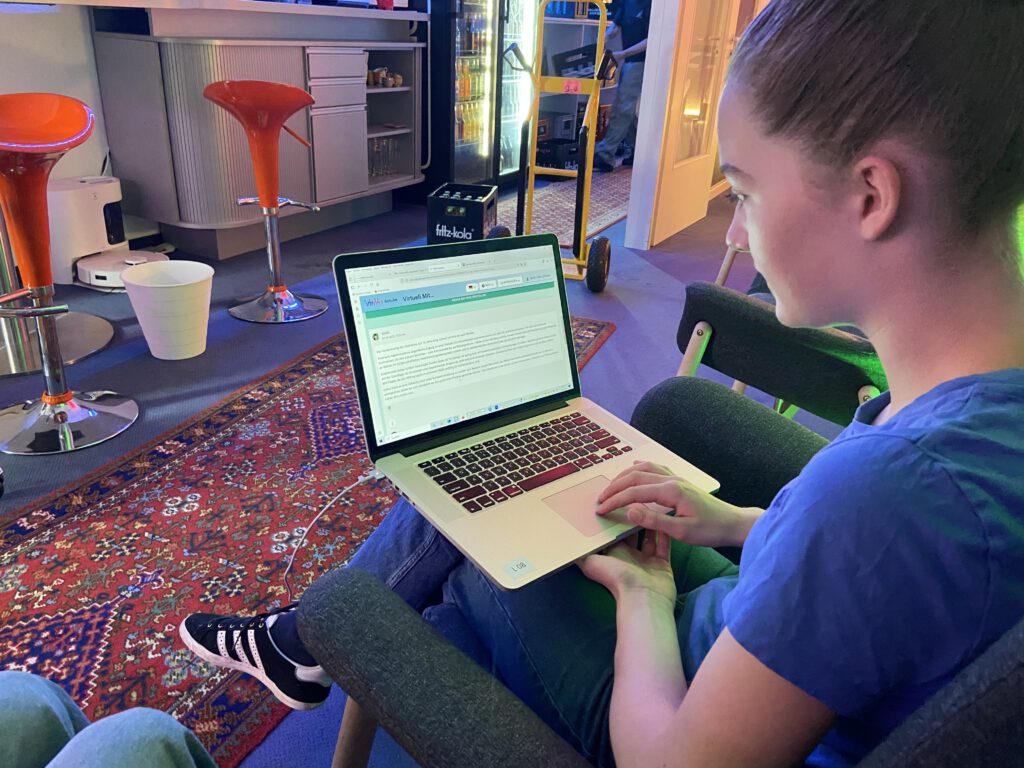
On the day before the workshop, 21 July 2025, Marina Lebherz, a staff member at ILEU e.V., introduced the eighteen participants to the online platform ‘ViMA danube’. While playing a ViMA bingo, the pupils worked interactively with the exchange platform, wrote their own comments and added some input on the Actionbound-entry. This served as preparation for the workshop, a slow thematic introduction, as well as a basis for further promoting a joint dialogue on the 17 Sustainable Development Goals (SDGs).
“Digital tools to strengthen communication between citizens from the Danube countries”
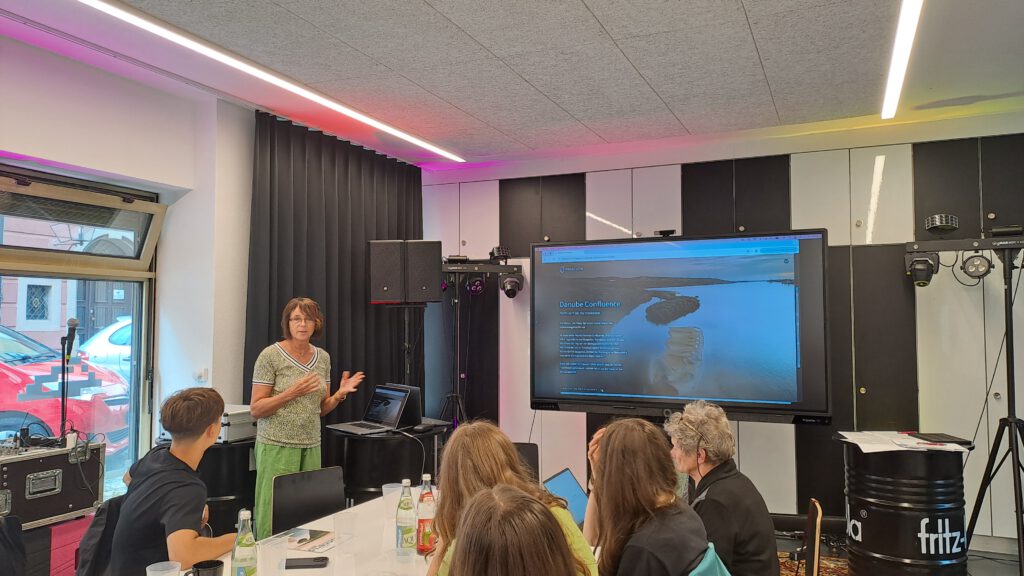
On the first day of the workshop, 22 July 2025, Sabine Geller introduced the participants to the topic of ‘storytelling techniques’ using the practical example of ‘Danube Confluence’. She explained how important it is to include detailed shots, to have a central theme in the interview as a point of orientation and to loosen up the content, for example with a funny question. The participants worked in five small groups and prepared their own interviews. Each group consisted of three to four people and represented the three nationalities. They researched their interview partners, collected person-specific questions and recorded some practice clips. The interviewees were Martin Ansbacher (Lord Mayor of Ulm), Carmen Stadelhofer (president of ILEU e.V.), Jana Pulli (federal volunteer from the Ulm Family Education Centre), Petra Schmitz (Managing Director of Local Agenda Ulm) and Helena Miller (member of ‘Die Grünen’ and Fridays for future). All of them are professionally or through their commitment connected to one or more SDGs, e.g. ‘4: Quality of education’ or ‘13: Climate action’. In the afternoon, the small groups interviewed their respective partners and shot close-ups of their workplaces. These recordings formed the basis for the next part of the workshop. Presentation in English Presentation in German
Actionbound Preparation Meeting Summary
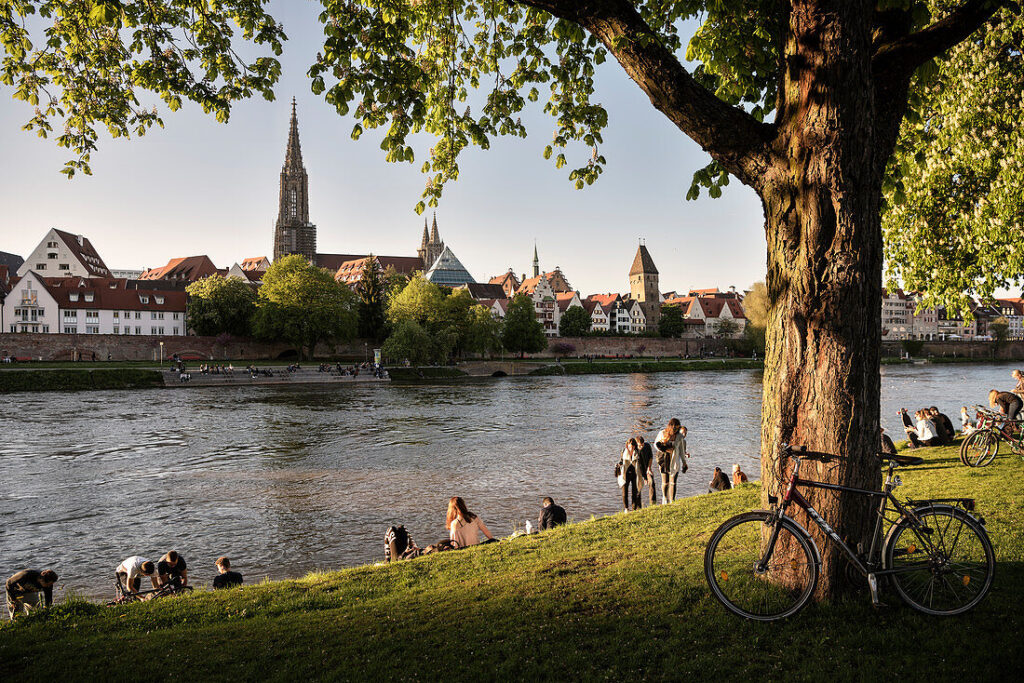
Date: Thursday, July 10, 2025Time: 18:00 – 19:30Participants: 21 international and local students, teachers, and project coordinators The meeting opened with a round of introductions and confirmation that all students had already connected with their host families and were in contact with their German peers. An overview of the upcoming exchange week in Ulm was provided, including planned activities and cultural experiences. Students were introduced to two key themes: storytelling and video creation. A specialist introduced the concept of digital storytelling, highlighting its importance in creating engaging and informative content through visual and narrative techniques. Practical advice was given on structuring interviews, gathering footage, and using editing tools. Another session focused on video production, with emphasis on planning, collecting sufficient material, and crafting a message. Students were encouraged to explore tools like Canva and CapCut and were provided with example links and tutorials. Logistical points were discussed: Suggestions for activities during Ulm’s Schwörwoche, including sports and festivals, were welcomed. Group organization and a shared online group for communication will follow soon. The session concluded with open questions, a final reminder to submit Germany ticket bookings, and confirmation that address information will be provided in Latin script.
5. International Project Meeting: Sustainability Goals in my City, 27.05.25
Focusing on SDG 3: Good Health & Well-being and SDG 5: Gender Equality The fifth international meeting of the Actionbound project “Sustainability Goals in My City” brought together 17 participants from Ulm, Odesa, and Sofia. While only about half of the participants have been accommodated so far, collaboration and exchange flourished during the session. At the beginning of the meeting Amelie from Lokale Agenda Ulm introduced the Actionbound platform, which will be used more independently by the partner cities. From June 2nd, Odesa and Sofia will receive their own accounts. Besides that, it was emphasized that future use of Actionbound should be kept under 1.5 hours to maintain focus and engagement. For any further questions, please contact: a.kruegler@gmx.de. Ulm: Inclusive Cafés and Sustainable Infrastructure SDG 13 – Climate Action: Smart Circular Bridge As a follow-up from Ulm on SDG 13, the city highlighted the innovative Smart Circular Bridge, which is constructed using fully recyclable materials. This sustainable infrastructure: SDG 10 – Reduced Inequalities: Café Blau Ulm also presented Café Blau, a prime example of local inclusion: SDG 3 – Good Health & Well-being: Kneipp Facility on Blauinsel A Kneipp water therapy facility on Blauinsel promotes health and fitness. Students were asked what they do to stay healthy. Their answers included: Odesa: Empowerment, Health, and Inclusion SDG 5 – Gender Equality: Vona Hub Odesa’s Vona Hub is at the forefront of promoting gender equality through: SDG 3 – Good Health & Well-being: Alternativa Founded in 2005, the Alternativa organization supports people affected by HIV. Its work includes: Sofia: Health Systems and Equality Progress SDG 3 – Good Health & Well-being: Medical Innovation and Accessibility Sofia presented an impressive overview of its health infrastructure: SDG 5 – Gender Equality: National and Local Progress Sofia addressed multiple aspects of gender equality: Looking Ahead The next digital meeting will take place on 23 June 2025, Let us continue our collaboration and commitment to the Sustainable Development Goals across borders and communities. Presentations Odesa Sofia Ulm
4. International Project Meeting: Sustainability Goals in my City, 29.04.254.International Meeting
Focusing on SDG 10: Reduced Inequalities & SDG 13: Climate Action The fourth international meeting of the Actionbound project “Sustainability Goals in My City” turned its attention to Reduced Inequalities (SDG 10) and Climate Action (SDG 13). Although students from Ulm were unable to join live due to illness, they remained involved digitally as groups from Odesa and Sofia shared insightful examples from their cities. Odesa: Striving for Inclusion Amidst Crisis The Ukrainian group focused on how Odesa is working to become a more inclusive city despite the immense challenges brought on by the war. To address SDG 10, they presented several ongoing initiatives: These actions reflect the urgent need to support people living with war-related injuries and disabilities. A recent feature by Deutschlandfunk sheds further light on this topic and was shared as part of the discussion:🔗 “Kriegsversehrte in Odessa” – Deutschlandfunk In comparison, participants noted that similar efforts exist in Germany, where cities also focus on barrier-free environments, inclusive education, and equal access to services. A Green Oasis in the Heart of Odesa For SDG 13, the Ukrainian group introduced the Botanical Garden of the Mechnikov National University. As one of the oldest scientific institutions in the city, it plays a crucial role in: Founded officially in 1842, and moved to the French Boulevard in 1880, the garden features many tropical and subtropical species and offers free entry, making it accessible to all citizens. Participants drew comparisons to botanical gardens in Germany, which often include medicinal plant collections and provide similar educational and conservation functions. Sofia: Welcoming Refugees and Building a Greener Future The Bulgarian group focused on two examples that illustrate Sofia’s engagement with SDG 10 and SDG 13. Under SDG 10, they presented the work of the State Refugee Agency (DAB-MS). Established in the 1990s, the agency coordinates: Participants highlighted how the agency works closely with governmental bodies and NGOs to foster inclusion and dignity for newcomers. For SDG 13, Sofia stood out as one of the greenest capitals in Europe. Efforts include: In contrast, participants observed that while Odesa has a well-used public transport system, bicycle lanes and pedestrian infrastructure are still limited, making Sofia’s achievements particularly noteworthy. The next digital meeting will take place on May 27, 2025, focusing on two new goals:Good Health and Well-being (SDG 3) and Gender Equality (SDG 5). Presentations Odesa Sofia Ulm
2. Local Meeting in Ulm with Local Agenda, 7.04.25
The second local meeting of the Actionbound project brought together a group of engaged individuals committed to designing an interactive scavenger hunt focused on sustainability and social justice in Ulm. A new participant with experience in community support, including food bank initiatives, joined the team. The meeting began with a brief overview of the project’s national and international scope, emphasizing collaboration with partner schools and a broader educational impact. Small groups presented updates on locations selected for the scavenger hunt: A central question raised during the meeting was whether to choose locations based on SDGs or select impactful places first and then link them to relevant goals. Most favored starting with places that resonate and building connections from there. Ideas were also collected for SDG 10 (Reduced Inequalities) and SDG 13 (Climate Action). Suggested locations included community gardens, solar-powered trash bins, a packaging-free shop, and public drinking water stations. Technical aspects were briefly discussed, such as preferred video formats and editing options. Emphasis was placed on keeping content accessible and engaging. Next steps include filming interviews, contacting local organizations, and finalizing content. The goal is to complete the scavenger hunt by July, potentially aligning with Ulm’s sustainability week. The next working session is scheduled for May 12, 2025.
3.International Project Meeting: Sustainability Goals in my City, 1.04.25
The third international meeting of the Actionbound project “Sustainability Goals in My City” focused on two key SDGs: Quality Education (SDG 4) and Peace, Justice, and Strong Institutions (SDG 16). Young participants from Germany, Bulgaria, and Ukraine presented meaningful places in their cities that embody these goals. In Ulm, the City Library was introduced as a vibrant place of knowledge, culture, and community. It offers not only books but also digital services and hosts public events. A group discussion highlighted the continuing importance of libraries in the digital age as spaces for learning, relaxation, and personal growth. From Bulgaria, a video showcased the “Chitalishte”—local cultural centers that promote lifelong learning and preserve traditions. These institutions were compared to German adult education centers but with a stronger focus on cultural engagement and creativity. The Ukrainian groups presented two examples: the Mechnikov University in Odesa, a renowned institution promoting academic excellence and sustainable practices, and a local NGO supporting civilians and stability during the war, representing SDG 16 in action. These stories illustrated young people’s strong commitment to education, peace, and social responsibility. Ulm’s contribution to SDG 16 included a memorial site at the city’s former courthouse, commemorating victims of Nazi-era euthanasia crimes. This understated yet powerful location underscores the importance of remembrance in maintaining peace and justice. During the final round, participants reflected on their experiences, emphasizing how the project deepened their knowledge, encouraged critical thinking, and provided a valuable opportunity to practice German while engaging in intercultural dialogue. The group also previewed the project’s website and discussed future topics, suggesting climate action (SDG 13), reduced inequalities (SDG 10), or sustainable cities (SDG 11) as next steps. The upcoming digital meeting is scheduled for April 29, 2025. Presentations Odesa Sofia Ulm
Meeting in the House of Sustainability 24.03.25
Some German students and the head of the Hdn were present at the meeting. She gave a tour of the house and explained what the House of Sustainability does. Below is a brief description of the house Founded in 2020, the House of Sustainability (HdN) is a collaborative initiative that brings together businesses, schools, and research institutions to drive sustainable development. A key focus group consists of scientists from the University of Applied Sciences Neu-Ulm, working on interdisciplinary approaches to sustainability. A Hub for Events and Innovation The HdN serves as a dynamic venue offering a wide range of activities, including a Repair Café and a lending shop. Events span from film nights and workshops to lectures, catering to a diverse audience. The space is designed with a large central hall featuring smaller seating areas for group discussions and collaboration. Additionally, a fully equipped kitchen fosters interaction and community engagement. Community and Creative Space A strong link exists with the University of Ulm, particularly its IT students, who originally founded Verschwörhaus, a hackerspace now integrated within the HdN. The space is designed for hands-on projects, enabling individuals to develop and execute their own ideas. Student Engagement and Sustainability The HdN collaborates closely with students from the University of Ulm, especially those studying sustainable economics and other sustainability-related disciplines. Around 50 students have participated in small group projects, contributing to various initiatives within the space. Ongoing Activities The HdN continuously engages students in practical projects, such as a recently filmed documentary about the lending shop. Additionally, a coworking space within the facility was established by a member of the University of Applied Sciences Neu-Ulm, further enhancing opportunities for collaboration and innovation.